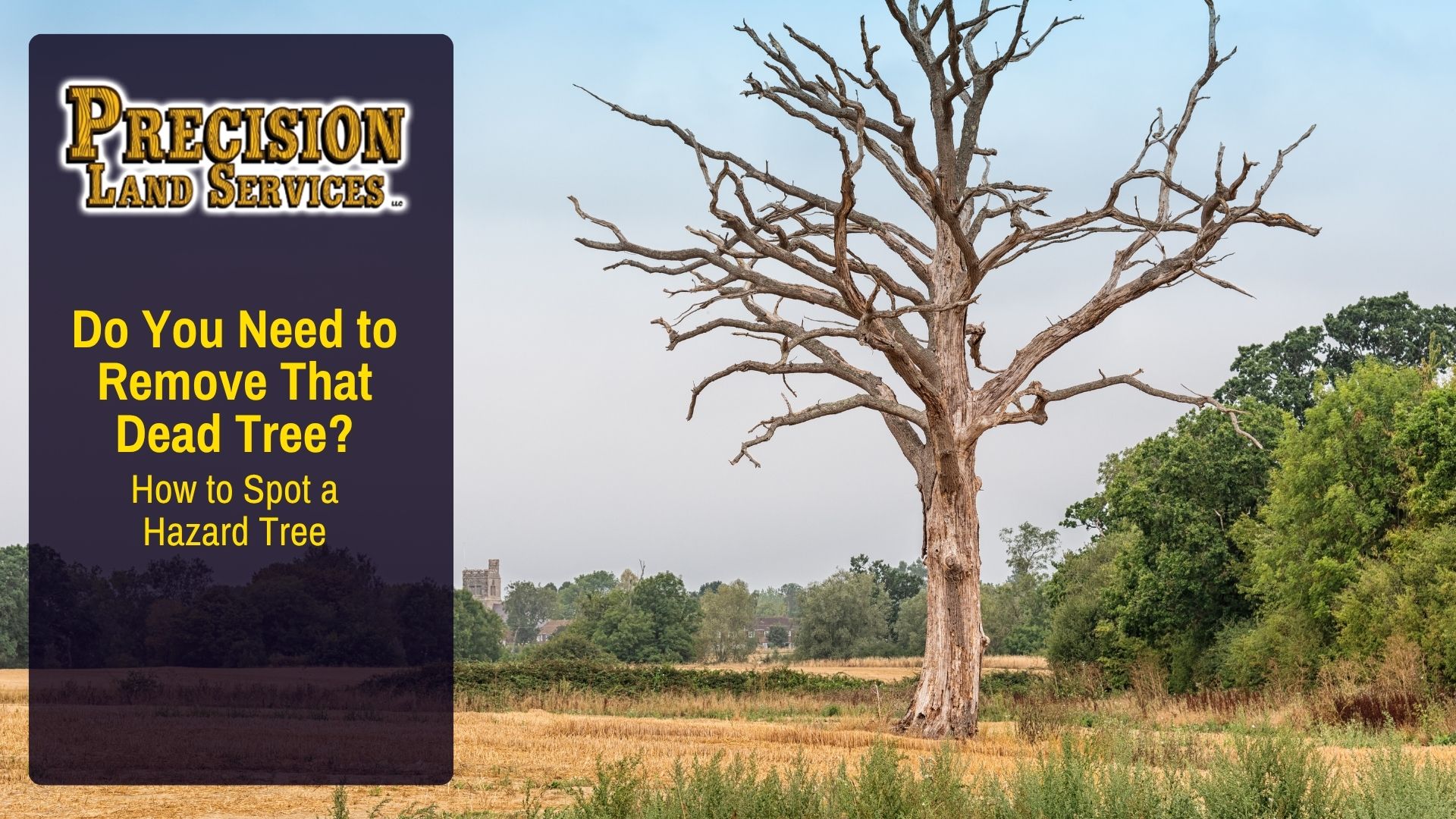
Not every dead tree on your property needs to come down right away. Some are a genuine hazard waiting to fail. Others can stand for years without causing a problem. The difference comes down to a handful of warning signs, not just whether the tree still has leaves.
Signs a Dead Tree Is an Immediate Hazard
A dead tree becomes urgent when it shows signs that it’s actually failing, not just dead. Some of those signs are visible from across the yard. A trunk that’s started leaning, especially if the lean is new, usually means the root system or base has already given way. Large cracks or splits running up the trunk tell a similar story, since they mean the wood itself is losing the structural integrity that holds the tree upright.
Other warning signs only show up once you get closer. Mushrooms or fungal growth at the base point to internal rot you can’t see from the outside, even when the rest of the tree looks intact. A hollow sound when you tap the trunk, bark peeling away in large sheets, and soil heaving or roots exposed at the base all point the same direction. The tree is closer to failing than it looks.
Location matters just as much as condition. A dead tree with a cracked trunk leaning toward a driveway outside Joplin is a different problem than the same tree standing in the middle of an open field. If it could fall on a structure, a power line, a fence, or anywhere people regularly walk or park, treat it as urgent regardless of how solid it still looks standing up.
When a Standing Dead Tree Can Wait
Not every dead tree needs to come down the moment it stops leafing out. A dead tree with a solid, uncracked trunk, no lean, and nothing valuable within falling distance can often be left standing for a while without real risk.
Some landowners around Neosho choose to leave a dead tree like this standing on purpose. A snag away from structures and trails provides habitat for woodpeckers and other wildlife, and removing it isn’t doing anything except spending money on a tree that wasn’t actually a problem. The decision comes down to the same two questions every time: is the tree structurally sound, and is anything within reach if it falls?
Fall Is a Practical Time to Deal With Hazard Trees
Fall gives you two real advantages for handling hazard trees. Once the surrounding trees and brush drop their leaves, a hazard tree that was screened by summer foliage becomes much easier to spot. Cracks, dead limbs, and canopy damage that stayed hidden from the ground all summer become visible too. It also means the tree isn’t still standing, compromised, when winter ice and wind loads hit hardest.
That second point matters more than it sounds. A tree that’s already cracked or leaning carries far more risk once snow or ice adds weight to its limbs. Removing it ahead of winter doesn’t guarantee you avoid all storm damage, but it takes one known risk off the table before the season that’s hardest on compromised trees arrives. If a storm does take a tree down before you get to it, we’ve covered how to handle the aftermath in an earlier post on restoring your property after a storm.
Check Local Rules Before You Cut
Do you need a permit to remove a dead tree? Usually not, at least not the same land disturbance permit required for larger clearing projects. Some cities and counties do have their own tree ordinances, though, especially for large trees or those near property lines, so it’s worth a quick call to confirm before cutting. We covered the broader permit landscape across Missouri, Kansas, Oklahoma, and Arkansas in an earlier post, which is worth a look if this tree is part of a bigger clearing job rather than a single hazard removal.
Large or Hazardous Trees Need the Right Equipment
A small dead tree in an open yard, with no structures or lines nearby, is a manageable job for a homeowner with the right tools and caution. A large hazard tree is a different situation entirely. Leaning trunks and hollow interiors behave unpredictably once a cut is made, and a tree anywhere near a structure, driveway, or power line needs equipment and rigging most property owners don’t have on hand.
Removing the tree is also only half the job. A stump left behind from a large hazard tree doesn’t just sit there looking unfinished. It can send up new growth or become its own hazard as it rots, which is why stump grinding usually belongs in the same conversation as the removal itself.
Start With an Assessment, Not a Guess
If you’re not sure whether a dead tree on your property is a real hazard or one that can wait, that’s worth resolving before winter season makes the decision for you. Precision Land Services offers free on-site assessments across the Four-States area to look at the tree’s condition and location and tell you plainly whether it needs to come down now.