
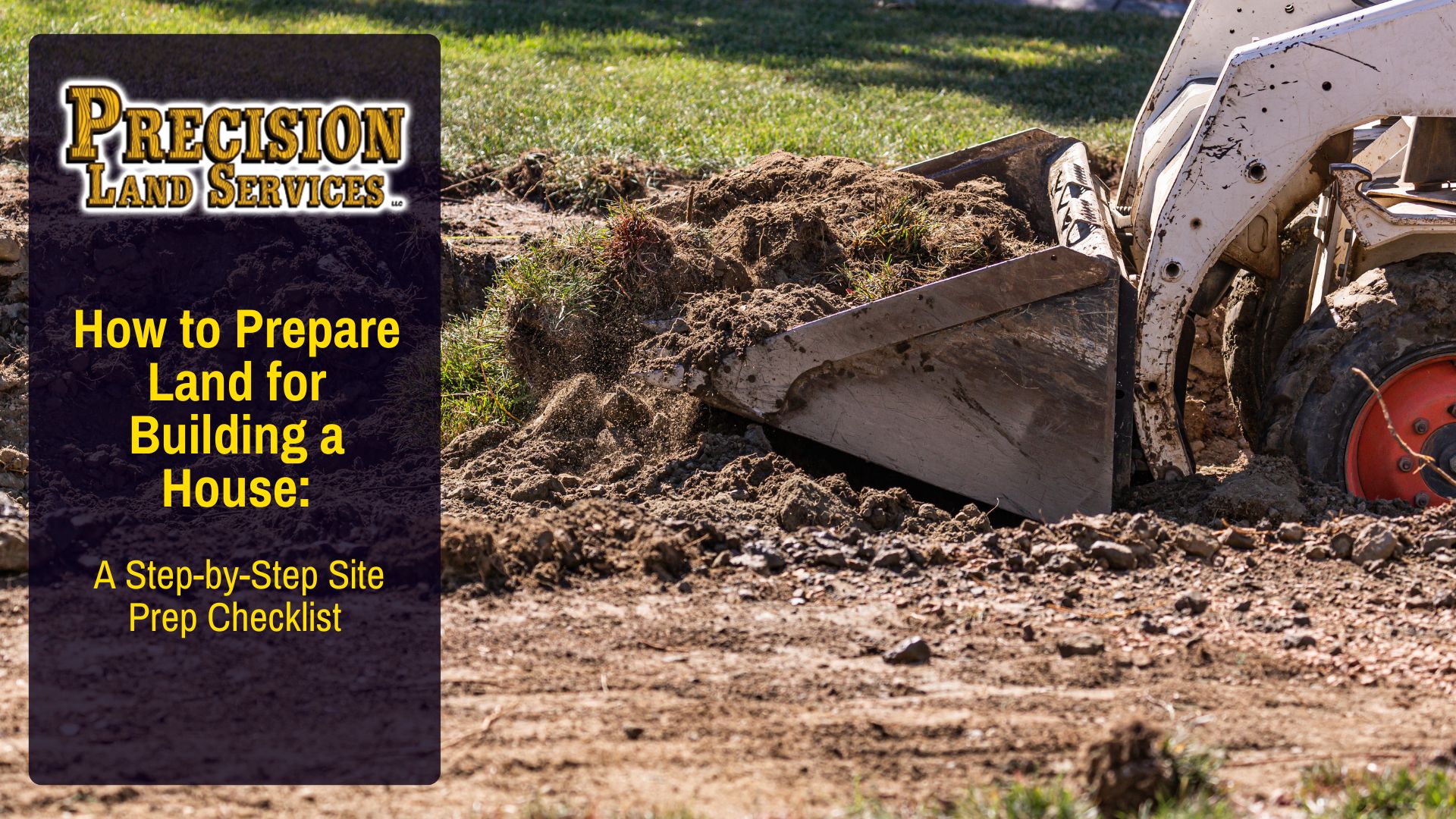
Buying raw land is the easy part. Knowing how to prepare land for building a house is where most first-time landowners get stuck. Nobody hands you a checklist for what actually needs to happen between "I own this property" and "the foundation crew shows up." If you're planning a build anywhere in the Four-States area, here's the real sequence, step by step.
1. Get a Site Evaluation Before You Touch a Tree
Before any equipment moves, walk the property with a land clearing contractor to assess vegetation density, drainage patterns, and terrain. This is also when you confirm what permits your county requires. Land disturbance rules differ across Missouri, Kansas, Oklahoma, and Arkansas, and skipping this step is the fastest way to get a stop-work order later.
2. Clear the Land
This is the step most people picture when they think "land clearing". Removing trees, brush, and overgrowth from the footprint of your future home, driveway, and septic or utility lines. For wooded lots, forestry mulching is often the most efficient method, since it grinds vegetation on-site instead of requiring separate hauling and disposal.
3. Remove Stumps and Grub the Roots
Cutting a tree down isn't the same as clearing it. Stumps and root systems left behind will settle unevenly, crack concrete, and cause problems years after your house is built. Full stump grinding and grubbing ensures the ground underneath your foundation is actually stable, not just clear on the surface.
4. Rough Grade the Site
Once the ground is clear, it needs to be graded — reshaped to the elevations your builder specifies, with proper slope away from the future foundation to prevent water pooling. This is also when low spots get filled and high spots get cut down, so your buildable lot is level enough for construction to start.
5. Prep the Building Pad
The area directly under your house needs extra attention: Compacted, stable soil that can support a foundation without shifting. This is typically the most precise part of site prep, since even small inconsistencies here can cause expensive problems after the frame goes up.
6. Build Your Driveway and Access Road Base
Your crew and materials need a way onto the property before construction starts. Furthermore, that access road often outlasts the framing crew and becomes your permanent driveway. Instead of trucking in gravel, on-site rock crushing turns stone already on your property into base material, cutting material costs while giving you a durable road base.
7. Address Erosion and Drainage Before You Build
Cleared land is exposed land. Before construction begins, silt fencing, temporary seeding, or grading adjustments should be in place to control runoff. This is especially true on sloped lots or property near creeks and drainage easements common throughout the Ozarks region.
How Long Does This Actually Take?
Timeline depends heavily on acreage, vegetation, and terrain. A cleared, level pasture lot moves through this checklist far faster than a heavily wooded, sloped parcel. That's why site evaluation (step one) matters so much: It's the difference between an accurate timeline and a guess.
Start With a Site Walk
Every one of these steps depends on what's actually on your land, not a generic national average. Precision Land Services offers free on-site evaluations across Neosho, Joplin, Pittsburg, and Bentonville, so you get a real plan for turning your raw land into a buildable lot. Contact us today!