
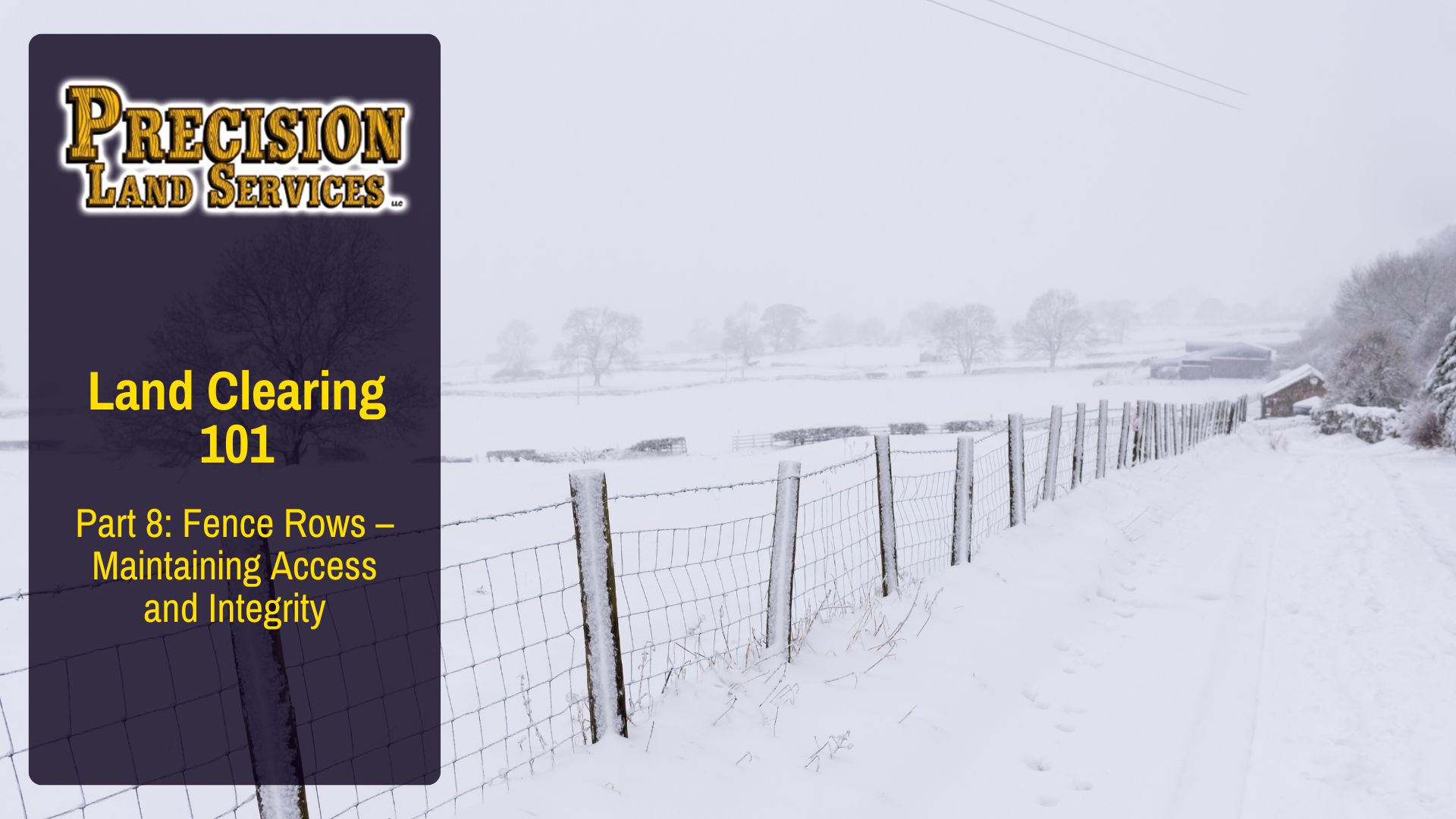
Fence rows serve as property boundaries, livestock barriers, and essential access corridors across agricultural and rural properties. Over time, these critical zones can become overgrown with brush, saplings, and encroaching vegetation that compromise fence integrity and limit accessibility. Professional brush removal along fence lines protects your investment while maintaining clear, functional boundaries.
Why Fence Row Maintenance Matters
Overgrown fence rows create multiple problems for property owners. Brush and trees growing against fence posts accelerate deterioration, while root systems can shift or damage fence foundations. Dense vegetation also provides cover for pests and prevents proper fence inspection. Regular brush removal ensures your fencing remains visible, accessible, and structurally sound for years to come.
Equipment and Techniques for Effective Clearing
Professional land clearing contractors use specialized equipment based on the density and type of vegetation present. Chainsaws handle larger trees and woody growth, while brush cutters efficiently tackle medium-sized saplings and thick undergrowth. For extensive fence row projects, forestry mulchers provide the most comprehensive solution, grinding vegetation into manageable mulch that enriches the soil.
Walk-behind and tractor-mounted mowers maintain fence rows after initial clearing, preventing regrowth and keeping access corridors open. The key is matching the equipment to the job scope—overusing heavy machinery can damage fences, while underpowered tools extend project timelines unnecessarily.
Protecting Fences During Removal
Experienced land clearing services prioritize fence protection throughout the removal process. This means working systematically from one end to the other. Tree removal along fence rows requires careful directional felling to avoid damaging existing structures.
Before beginning any stump removal near fencing, mark underground utility lines and buried fence supports. Grinding stumps too close to fence posts can destabilize the entire fence section, requiring costly repairs that negate the benefits of clearing.
Efficient Debris Management
The debris removal phase determines whether a fence row project succeeds or creates new problems. Brush piles left along fence lines attract pests, create fire hazards, and block access. Professional contractors chip smaller material on-site or haul debris away entirely, leaving clean corridors ready for maintenance access.
For organic debris, consider options beyond simple disposal. Mulched material can be spread along fence rows to suppress future weed growth, while larger wood pieces may serve as border markers or erosion control.
Planning Your Fence Row Project
Successful fence row brush removal requires strategic planning. Schedule fence row maintenance during dormant seasons when possible. Winter clearing provides better visibility, reduces soil compaction, and minimizes impact on wildlife habitats—an approach that aligns with ecologically sound land management practices.
Work With Proven Professionals
Maintaining clear fence rows protects your property investment and ensures long-term access across your land. Contact Precision Land Services today to schedule professional fence row brush removal that preserves fence integrity while restoring clear boundaries to your property.